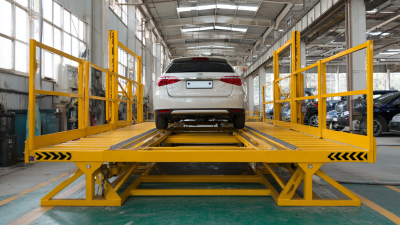
Looking to find the perfect mobile car lift to upgrade your garage? Honestly, having the right gear can totally change the game. A good mobile car lift isn’t just about convenience — it can really boost your efficiency when you're working on vehicles. Whether you’re a self-proclaimed car buff or a pro mechanic, picking out the right lift is a pretty big deal.
When you're checking out options, make sure to look at things like how much weight it can handle, how portable it is, and how easy it is to operate. Some lifts sound amazing in their specs but do they actually perform well in real life? It’s worth doing a little research on trusted brands like BendPak or Atlas to find reliable choices. And don’t forget to peek at user reviews — they give you a real sense of how these lifts hold up day-to-day.
Buying a mobile car lift isn’t just a quick purchase; it’s worth taking your time to think things through. Finding one that fits your budget and your garage space can be tricky. Be sure to pay close attention to the specs and weight capacities. No need to rush — good things take time. Ultimately, the right lift should match your specific needs and make your garage work a whole lot easier and more enjoyable.
Mobile car lifts offer a practical solution for garage enthusiasts and mechanics alike. They provide the convenience of quick vehicle access without the need for a fixed lift. Understanding their basic functions is essential for selecting the right lift for your needs. Various types exist, including scissor lifts and platform lifts, each with unique advantages. Scissor lifts are compact and ideal for low ceilings, while platform models can accommodate larger vehicles effortlessly.
Safety should be a top priority when using these lifts. Many mobile car lifts have features like safety locks and emergency stops. Regular maintenance and inspection are crucial for reliability. Consider the weight capacity of the lift, as exceeding limits can lead to equipment failure or even accidents. You might encounter challenges when adjusting to new lifting techniques. It may take time to feel comfortable with the equipment.
As you explore your options, think about your garage space and vehicle types. Reflect on whether a portable unit meets your requirements. The right lift can enhance your efficiency and safety in automotive tasks. However, investing in quality over cost is often a better choice. Remember, a well-informed decision leads to better experiences and fewer issues down the line.
When selecting a mobile car lift, it’s crucial to understand the various types available and their features. Mobile car lifts typically fall into two main categories: two-post lifts and four-post lifts. A two-post lift is often lighter and more portable, making it ideal for small garages. It allows quick access to the vehicle’s undercarriage, essential for many maintenance tasks. In fact, according to a recent industry report, 70% of mechanics prefer two-post lifts for routine repairs due to their space efficiency.
On the other hand, four-post lifts offer enhanced stability and support. They are ideal for larger vehicles or those needing extended maintenance. Their design allows for easier loading and unloading and can even accommodate more weight. Data suggests that four-post lifts can support vehicles up to 12,000 pounds, making them suitable for professional garages. However, they consume more space and may pose accessibility challenges compared to their two-post counterparts.
When contemplating a mobile lift, consider your specific garage needs, including space, vehicle types, and intended use. Keep in mind that while mobile car lifts provide convenience, improper use may lead to safety risks. Proper training on their operation is essential to prevent accidents and ensure longevity in performance. These factors highlight the importance of careful selection and training when investing in mobile car lifts.
Choosing the right mobile car lift for your garage requires careful consideration. Not all lifts are created equal, and understanding key factors can significantly impact your experience. Weight capacity is one of the primary considerations. According to industry reports, most mobile car lifts support vehicles up to 6,000 lbs. However, if you plan to work on heavier vehicles, opting for a lift with a higher weight capacity is advisable.
Another aspect to evaluate is the lift's height. Many models provide a lifting range of 14 to 24 inches. This variation means some lifts are lower to the ground when parked, which can be beneficial in confined spaces. Additionally, portability is crucial. Some lifts come with wheels for easy maneuverability. However, there is a trade-off between portability and stability. A more portable model may sacrifice sturdiness, which can lead to safety issues.
Lastly, consider the material quality of the lift. Steel lifts are often sturdier but can be heavier and harder to move. In contrast, aluminum lifts are lightweight but may not offer the same durability. According to a survey on user experiences, 30% reported issues with lifting height and stability. Prospective buyers should weigh these factors carefully to ensure they make an informed choice.
When choosing a mobile car lift, safety features should be a top priority. According to industry reports, about 30% of accidents involving lifts are related to equipment failure. Quality mobile car lifts should have robust safety mechanisms, such as automatic safety locks. These locks prevent unintended descent during maintenance, significantly reducing risks.
Another vital feature is a stable base. Many mobile car lifts come with adjustable height settings and non-slip pads. These ensure that the lift remains stable during use. Studies show that a stable platform can reduce accidents by up to 25%. Look for lifts that provide emergency stop functions, as they offer immediate control in crisis situations.
Tips: Always inspect the lift before use. Look for wear and tear. Regular maintenance checks can prevent failures. Additionally, ensure your garage’s flooring can support the lift's weight capacity to avoid stability issues. Educating yourself about the specific safety features of mobile lifts can lead to better purchasing decisions. Understanding these features is essential for both home mechanics and professionals.
When it comes to installing a mobile car lift, several aspects require careful consideration. Ensuring a stable, flat surface is essential. This will provide a solid foundation for the lift and enhance safety during use. Check your garage floor for cracks or uneven spots. A weak foundation can lead to unanticipated shifts. It’s wise to consult with professionals for advice on repair or reinforcement if needed.
Maintenance is crucial for the longevity of mobile car lifts. Regularly inspect hydraulic systems and ensure they function correctly. Lubricate moving parts to prevent wear and tear. Over time, rust can accumulate in various components. Regular cleaning helps avoid this problem. Not every owner remembers to do this. Hence, setting a maintenance schedule is beneficial.
Training on proper usage can prevent accidents. Not all users are familiar with the lift's operation. Misuse can lead to injury or damage. Providing a detailed manual or holding a short training session enhances safety. Addressing these potential pitfalls improves overall reliability and performance. A little knowledge goes a long way in achieving successful maintenance.
When choosing a mobile car lift for your garage, various brands and models stand out. Look for lifts that provide ample height and are easy to use. Some are designed for home mechanics, while others serve professional garages. Consider capacity, lift speed, and safety features when making your decision.
Tips: Always check the weight limit of the model you choose. Lifts that seem sturdy may have hidden weaknesses. Reading user reviews can offer insights into durability and ease of use.
Maintenance is crucial. Regularly inspect your lift for any signs of wear or damage. Neglecting this step can lead to accidents or costly repairs. Make a list of your garage needs first. This clarity will guide your choice.
Research is essential before purchasing. Compare features and prices among different lifts. A cheaper option may cost more in the long run if it fails. Invest wisely, and don't rush the process.
When considering a mobile car lift for your garage, cost analysis is crucial. The price range typically falls between $1,200 and $3,500. This variance depends on load capacity, lift height, and build quality. A lift capable of handling heavier vehicles generally costs more. For example, professional-grade lifts often exceed $2,500 due to their robust construction.
Maintenance costs can also impact total expenditure. Routine checks and occasional repairs are necessary. According to industry reports, maintenance can add an average of $200 to $400 annually. Additionally, such lifts usually last between 10 to 20 years with proper care. Therefore, initial investment and ongoing costs need thorough consideration.
Another aspect is installation. Some models require professional setup, adding to the expense. Installation fees can range from $150 to $500. Choosing a lift that fits your garage's space is vital. If your garage has limited room, opting for a compact design may be wise. Not all models perform equally well in tight spaces. Reassessing your garage layout and keeping safety regulations in mind can enhance your investment's value.
The Business Car Inground Lift Series L7800 revolutionizes the auto repair industry by unlocking unprecedented efficiency and safety in vehicle maintenance. Designed for use with both passenger cars and trucks, this inground lift series incorporates advanced technology to streamline various lifting operations. The dual configurations of the lift—available in both two-post and four-post systems—allow for flexibility in handling different types of vehicles, ensuring that mechanics can work on any job with ease.
One of the standout features of the L7800 series is its use of PLC (Programmable Logic Controller) control, which enhances the operational precision and reliability of the lift. This technology facilitates a combination of hydraulic synchronization and rigid synchronization, rendering the lifting process smoother and more secure. As a result, technicians can focus on their work without worrying about the stability of the vehicle being lifted. This innovative lift not only improves workflow but also significantly reduces the likelihood of accidents, thereby enhancing safety in the workplace.
In addition to efficiency, the L7800 series is customizable to meet the unique demands of various repair shops. This adaptability ensures that businesses can optimize their operations, catering to different workloads and vehicle specifications effortlessly. By investing in such advanced lifting technology, auto repair facilities can elevate their service quality while maximizing productivity.
: Evaluate weight capacity, height range, portability, and material quality. Each factor impacts safety and usability.
Most models support up to 6,000 lbs. Choose higher capacity for heavier vehicles.
Lifts vary from 14 to 24 inches. Lower models are more suitable for tight spaces.
Portable lifts have wheels for easy movement but may sacrifice stability, impacting safety.
Look for automatic safety locks, stable bases, and emergency stop functions to ensure safe operation.
Inspect hydraulic systems, lubricate moving parts, and clean regularly to prevent rust and ensure functionality.
A solid foundation ensures safety and prevents unexpected shifts during lift operation.
Neglecting maintenance can lead to equipment failure and safety risks during use.
Providing user training ensures proper operation, reducing the chance for accidents or misuse.
Always inspect it for wear and tear. Regular checks can help avoid accidents.
When considering a Mobile Car Lift for garage use, it's essential to understand its basics, including the various types available and their unique features. Different mobile car lifts cater to diverse needs, providing options for home mechanics and professional use alike.
Key factors to consider when selecting a mobile car lift include the weight capacity, features such as portability and ease of use, and crucial safety aspects that ensure the lift's stability and reliability during operation. Proper installation and maintenance are also vital to ensure longevity and optimal performance. By evaluating these considerations and analyzing costs, users can make informed decisions, ensuring that their mobile car lift meets both practical and safety standards for their specific garage needs.