
Picking out the right Portable Lift isn’t just about comparing prices—that’s only part of the story. For those making the big decision, it’s really important to look at things like lifting capacity, how high the platform goes, what kind of power it uses, wheel design, braking systems, and how easy it is to access for maintenance. For example, a compact lift might fit nicely next to a delivery van, but it could struggle on uneven warehouse floors. On the other hand, a model that can reach really tall heights might end up taking up more storage space than you expected.
David Round, a seasoned lifting-equipment consultant, once pointed out, “A safe lift starts with the load, the floor, and the operator.” Honestly, that’s still spot on. Every Portable Lift should be suited to the real working environment—not just look good in the brochure. It’s a good idea to double-check things like rated capacity, lifting speed, emergency lowering options, how long the battery lasts, and whether replacement parts are easy to find. Also, don't forget about local voltage—something that seems minor can turn into a costly hassle if overlooked.
This guide covers ten different types of Portable Lifts—things you’re likely to see in workshops, warehouses, retail stores, logistics hubs, and service companies. We’re talking about mobile scissor lifts, material lifts, personnel lifts, drum lifts, pallet lifts, and some more specialized options. Each type has its own perks, but honestly, no single one is perfect for every task. That’s the tough part.
Sometimes, specs look amazing on paper, but reality can be a different story—floors might be uneven, or space constraints tighter than expected.
Also, this comparison highlights some often-overlooked questions: Have you thought about operator training, regular inspection routines, the weight it adds during transport, and after-sales support? Trust me, good manufacturers will provide clear manuals, traceable testing info, and quick, helpful tech support. Make sure to verify these details before you place an international order. Sometimes, going for the cheapest option might end up costing you more in the long run. Taking the time to choose the right Portable Lift can really save your team time, money, and hassle—keeping everyone safe and productive.

Portable Lift Fundamentals and Global Buyer Needs
Top 10 Types of Portable Lift for Global Buyers?
Portable lift selection starts with the task, not the catalog photo. Buyers may compare scissor lifts, mast lifts, gantry lifts, engine hoists, vehicle lifts, stair lifts, patient lifts, vacuum lifts, hydraulic lifts, and electric lifts. Each design serves different loads, heights, surfaces, and work cycles. A warehouse may need compact wheels and frequent movement. A care facility may require quiet operation, patient stability, and easy cleaning.
The WHO and UNICEF Global Report on Assistive Technology states that more than 2.5 billion people need assistive products worldwide. That figure could exceed 3.5 billion by 2050. These figures show why patient and accessibility lifts need careful sizing. Rated capacity is only one factor. Buyers should check sling compatibility, emergency lowering, battery endurance, turning radius, charging voltage, and maintenance access. A lift that works indoors may fail on uneven outdoor flooring.
Workplace risk deserves equal attention. The International Labour Organization reported nearly 3 million work-related deaths globally in 2019. Portable equipment needs visible load charts, stable outriggers, guarded moving parts, and documented inspections. ISO 10535:2021 supports safer design considerations for hoists used in disability transfer. However, compliance marks do not replace site assessment. A common review mistake is choosing maximum height first. That can create poor stability, transport problems, or unnecessary cost. Local voltage, climate, training quality, and service support may matter more than advertised capacity.
| No. | Portable Lift Type | Typical Rated Capacity | Typical Lift Height | Primary Lifting Method | Common Applications | Mobility and Setup | Key Buyer Considerations |
|---|---|---|---|---|---|---|---|
| 1 | Portable Two-Post Lift | 3.0–6.0 t | 1.8–2.0 m | Electro-hydraulic | Passenger cars, light commercial vehicles and routine underbody service | Moveable columns or a detachable frame; requires a level, load-bearing floor | Check arm reach, column locking, floor strength, power supply and vehicle-center-of-gravity limits |
| 2 | Mobile Column Lift Set | 15–40 t per complete set | 1.6–1.9 m | Electro-hydraulic, synchronized columns | Buses, trucks, trailers and heavy commercial vehicles | Independent wheeled columns can be positioned around the vehicle; setup is comparatively flexible | Verify axle-load distribution, synchronization accuracy, battery endurance and charging compatibility |
| 3 | Portable Full-Rise Scissor Lift | 3.0–4.0 t | 1.0–1.8 m | Hydraulic scissor mechanism | General automotive repair, tire service and detailing | Can be relocated with wheels or a handling kit; needs adequate clearance beneath the platform | Compare platform length, mechanical locks, pinch-point protection and minimum vehicle clearance |
| 4 | Portable Mid-Rise Scissor Lift | 2.5–3.5 t | 1.0–1.4 m | Hydraulic or electro-hydraulic | Wheel removal, brake work, exhaust service and mobile workshops | Compact footprint and relatively simple relocation; often suitable for small service bays | Assess access to the vehicle underside, ramp length, locking positions and storage requirements |
| 5 | Portable Low-Rise Lift | 2.5–3.5 t | 0.45–0.75 m | Hydraulic or pneumatic-hydraulic | Wheel and tire work, brake inspection, body repair and quick service | Low profile and easy to store; typically designed for short-duration lifting | Confirm minimum adapter height, wheelbase range, safety locks and whether full underbody access is available |
| 6 | Portable Single-Post Lift | 2.0–3.5 t | 1.5–1.8 m | Hydraulic or electro-hydraulic | Passenger vehicles, wheel service and space-constrained workshops | Small footprint and relatively easy repositioning; load balance is especially important | Check chassis contact points, lateral stability, parking-lock design and manufacturer-specified loading zones |
| 7 | Portable Wheel-Engaging Lift | 2.0–3.0 t | 1.2–1.8 m | Hydraulic or electro-hydraulic wheel platforms | Quick inspections, tire changes, roadside support and detailing | Rolls into position and lifts through the wheels; generally requires a smooth, level surface | Evaluate tire-size range, platform width, wheel chocks, stability controls and transport weight |
| 8 | Portable Air-Hydraulic Jack | 10–30 t | 0.15–0.50 m | Compressed-air-assisted hydraulics | Truck, bus, agricultural and heavy-equipment wheel service | Compact and highly mobile; requires a suitable compressed-air source and separate support stands | Check minimum saddle height, air-pressure range, overload protection and mandatory use of safety stands |
| 9 | Portable Motorcycle Lift | 0.4–1.0 t | 0.75–1.2 m | Hydraulic, pneumatic or mechanical screw lift | Motorcycle maintenance, inspection, wheel removal and storage preparation | Compact platform with casters or a movable base; can be stored when not in use | Confirm deck dimensions, tie-down points, wheel vise compatibility and stability for different motorcycle types |
| 10 | Portable Parallelogram Lift | 3.0–4.0 t | 1.2–1.8 m | Hydraulic parallelogram linkage | Automotive service, alignment preparation and vehicles with varied wheelbases | Surface-mounted and movable with appropriate handling equipment; generally has a broad platform | Review approach angles, platform width, lateral stability, mechanical locks and alignment equipment clearance |
Data note: Capacity and lift-height figures are typical market ranges for portable vehicle-lifting equipment. Actual limits depend on the lift design, vehicle loading pattern, installation surface, safety system and applicable local regulations.
Portable Car Quick Lift DC Series: A Smarter Solution for Fast and Easy Tire Changes
A portable car quick lift offers a smarter way to handle fast and easy tire changes, especially in garages, workshops, and roadside service situations. Designed with a compact DC power system, this lift combines practical performance with convenient storage. Its split structure includes two independent lifting frames and one power unit, allowing the components to be stored separately when not in use. This design saves space while keeping the equipment ready for efficient vehicle maintenance.
Each lifting frame is lightweight enough for one person to carry and position with minimal effort. Built-in tow wheels make transportation easier, while universal wheels support smooth movement and fine adjustment around the vehicle. Once properly positioned, the two frames work together to raise the car securely, providing convenient access to the tires and lower working areas. With its portable construction, simple handling, and space-saving design, this quick lift helps make routine tire changes faster, easier, and more flexible without relying on bulky fixed lifting equipment.

FAQS
Start with the task, not the catalog photograph. Check load shape, lifting height, surface, movement, and work frequency. A crowded aisle may favor a lighter lift. More capacity is not always better.
Check rated capacity, sling compatibility, emergency lowering, battery endurance, and charging voltage. Turning radius also matters in narrow rooms. Smooth floors help. Uneven outdoor surfaces may create problems.
No. Compliance marks support safer design, but they do not replace site assessment. Inspect floors, travel paths, operator training, and emergency access. Paperwork alone is not enough.
Confirm rated capacity, minimum pad height, maximum lifting height, and locking design. Check the required floor condition and available turning space. Small positioning errors matter with two-post systems.
Scissor lifts raise from the vehicle’s center and leave the wheels accessible. They suit compact garages but need careful positioning. Four-post lifts feel steadier and support tires. Their longer footprint needs more space.
Inspect battery condition, column synchronization, emergency lowering, and wheel clearance. Confirm the floor can support every column. Portable does not mean effortless.
Match the lift to entry height, fork width, load center, and floor condition. Drum lifts need secure gripping because rounded containers can shift. Move slowly. Watch the load.
No. An uneven load can behave differently from a balanced load. Check wheel stability, lowering speed, emergency controls, and visibility. A smaller lift may work better in a tight aisle.
Request inspection procedures, spare-part access, maintenance instructions, and service response details. Confirm voltage compatibility and climate suitability. Product sheets may omit awkward limitations. Ask direct questions.
Conclusion
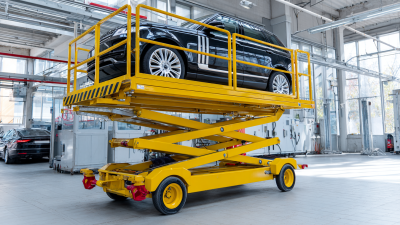
Choosing the right Portable Lift requires more than comparing lifting capacity and price. Global buyers should first identify the intended application, including vehicle servicing, warehouse handling, or safe access to elevated work areas. Vehicle options include scissor, two-post, four-post, mobile column, and wheel lifts, each offering different advantages in stability, mobility, clearance, and installation requirements. For material handling, pallet lifts, drum lifts, and compact hydraulic lifts can support efficient movement in limited spaces. Portable mast lifts and personnel platform lifts are designed for temporary access tasks where flexibility and easy relocation are important.
A practical comparison should consider load capacity, lifting height, footprint, power source, operating controls, safety features, maintenance needs, and transport convenience. Buyers should also review regional compliance requirements, documentation, packaging quality, shipping conditions, spare-part availability, warranty terms, and supplier reliability. By evaluating performance, safety, total ownership cost, and after-sales support together, purchasers can select a Portable Lift that fits their workplace, shipping destination, and long-term operational needs.
Related Posts
-

7 Best Roller Portable Car Lifts for Global Buyers
-

How to Choose the Best Portable Car Lift Scissor?
-

What Is the Best Mobile Car Lift for Global Buyers?
-
Ultimate Checklist for Sourcing the Best Car Scissor Lift Portable for Your Business Needs
-

Unlock Efficiency: How Portable Car Scissor Lifts Revolutionize Automotive Maintenance with 30% Time Savings
-

Best Portable Car Lift Scissor for Home Use in 2026?
