So here’s the thing about picking a portable car jack in 2026: it really comes down to what you drive, what you’re fixing, and where you’ll actually be using the thing. If you’re mostly dealing with flat tires on the side of the road, a compact electric jack is probably your best friend. But if you’re in a home garage, a hydraulic floor jack just feels smoother and more solid. Scissor and bottle jacks? They each have their own quirks with storage, lift range, and general handling. Honestly, there’s no one-size-fits-all answer.
Okay, first things first—you’ve gotta pay attention to the important stuff: how much your vehicle weighs, where the approved lifting points are, how much ground clearance you’re working with, and what the jack is actually rated for. Then look at the lift range, the base width, what powers the thing, and if it comes with handy extras like a carry case or a lug wrench. Honestly, a little sedan on flat concrete is a totally different ballgame than a big SUV on a sloped driveway. Stability is huge. And fit? That matters just as much.
Look, I get it—when you’ve got a flat tire, grabbing the fastest jack you can find is tempting. But that’s often where things go sideways. A jack only works if you use it according to the vehicle maker’s instructions, and honestly, it’s never a replacement for properly rated support stands when you’re working underneath a vehicle. So yeah, read the manual, give the equipment a quick once-over, and avoid lifting on soft or uneven ground. I know all that sounds super basic—but those are exactly the checks you’ll want to skip when you’re already stressed and running late. So you're looking for a portable jack? This guide breaks down the common types and digs into the trade-offs you should really think about before making a call. And yeah, some specs look amazing on a product page — big numbers, fancy features — but how useful it actually is depends on your vehicle and where you'll be using it. That part tends to get overlooked. Honestly, it deserves a second look.

Classify Portable Car Jacks by Mechanism, Lift Range, and Rated Capacity
Portable car jacks are easier to compare when buyers separate three questions: mechanism, lift range, and rated capacity. Scissor jacks use a compact screw mechanism and fit neatly in many trunks. Hydraulic bottle jacks offer a small footprint, but their taller closed height may not fit beneath a low car. Trolley jacks roll on wheels and suit garages, though they need firm, level ground. ASME PASE covers portable automotive service equipment, including jacks, and provides a useful safety reference. The U.S. EPA’s Automotive Trends Report records an average new-vehicle weight of about 4,329 pounds for model year 2023. That figure is context, not a jack-sizing rule. That shortcut is tempting, but imperfect.
Check lift range as a pair of measurements: minimum saddle height and maximum lifting height. A low sports car may need a thin saddle; a higher-clearance vehicle may need more travel. Rated capacity matters just as much. Match it to the load at the lifting point, not simply the vehicle’s advertised curb weight. Consult the owner’s manual for approved lifting points, and use a stable support stand when working beneath a raised vehicle. Never rely on the jack alone. Buyers can record the vehicle’s ground clearance, lifting-point location, and manual guidance before choosing. Small details matter; measuring twice is less exciting, but safer.
Compare Scissor, Trolley, and Bottle Jacks Across Common Load Classes
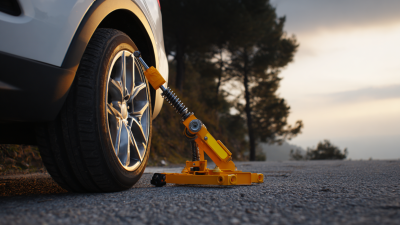
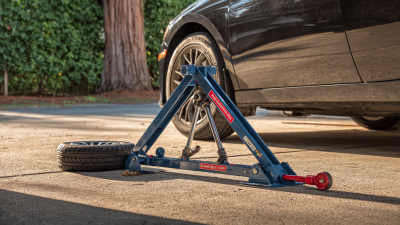
Portable scissor, trolley, and bottle jacks suit different jobs, even when their rated capacities overlap. Scissor jacks are compact and commonly rated around 1.5–2 tons, making them useful for roadside wheel changes on compatible cars. Their narrow base and slower screw action can feel awkward on uneven pavement. Trolley jacks, often rated at 2–3 tons, roll under a vehicle and lift more quickly; their larger frames need clear floor space. Bottle jacks can offer higher capacities, commonly from 2 tons upward, but their taller starting height may not fit beneath low-clearance cars. That distinction matters.
Capacity is not the same as suitability. The U.S. EPA’s 2024 Automotive Trends Report states that average new-vehicle weight reached 4,329 pounds in model year 2023. That figure is context, not a jack-sizing formula: a jack lifts at a specified point, and vehicle weight is not evenly distributed. Check the vehicle manual, lifting-point location, jack range, and rated capacity before buying. A practical check: measure ground clearance with the tire inflated. Never work beneath a vehicle supported only by a jack; use correctly positioned stands on firm, level ground. I would not choose a bottle jack for a low sedan just because its rating looks impressive.
Convert Rated Capacity: 1 U.S. Ton-Force Equals About 8.90 kN
Portable car jacks include scissor, bottle, and low-profile hydraulic types. Their shapes affect where they fit, how easily they travel, and how much effort lifting takes. Capacity labels can be confusing when listings use different units. One U.S. ton-force equals about 8.90 kN. So a 2-ton-force rating is roughly 17.8 kN, not simply a statement about a vehicle’s weight. Units can mislead.
When comparing jacks, check the rated capacity and the vehicle manual’s approved lifting points. The jack must handle the load at the intended contact point, not just sound suitable for the whole vehicle. A compact scissor jack may suit roadside storage, while a bottle jack often offers more lifting force in a small footprint. A floor jack can be easier to position on firm, level ground, but it is less portable. I would still double-check clearance; a rating alone says little about fit.
Tips: Convert every listing to the same unit before comparing. Keep the base on firm, level ground, and never work beneath a vehicle held only by a jack. Use correctly rated support stands. I once focused too much on capacity and overlooked minimum height—an avoidable mistake.
2026 Top Portable Car Jack Lift Types for Buyers? - Convert Rated Capacity: 1 U.S. Ton-Force Equals About 8.90 kN
| Jack type |
Typical rated capacity |
Approx. capacity in kN |
Typical lift range |
Typical jack weight |
Best suited for |
Buyer considerations |
| Manual scissor jack |
1.0–1.5 U.S. ton-force |
8.90–13.35 kN |
About 3.5–15 in (9–38 cm) |
About 5–10 lb (2.3–4.5 kg) |
Compact roadside storage and occasional tire changes |
Light and simple, but raising a vehicle takes manual effort. Check that the saddle fits the vehicle’s approved lift point. |
| Electric scissor jack |
1.0–2.0 U.S. ton-force |
8.90–17.79 kN |
About 3.5–17.7 in (9–45 cm) |
About 10–18 lb (4.5–8.2 kg), excluding some accessories |
Drivers seeking powered lifting for emergency wheel changes |
Requires a suitable 12 V power source or charged battery. Check the vehicle’s ground clearance and the jack’s rated capacity. |
| Hydraulic bottle jack |
2.0–6.0 U.S. ton-force |
17.79–53.38 kN |
About 6–18 in (15–46 cm), depending on model |
About 4–15 lb (1.8–6.8 kg) |
Vehicles with enough underbody clearance and buyers wanting high capacity in a compact footprint |
The closed height may be too tall for low-clearance cars. Confirm both minimum height and maximum lift height before purchase. |
| Low-profile hydraulic bottle jack |
2.0–4.0 U.S. ton-force |
17.79–35.59 kN |
About 5–15 in (13–38 cm), depending on model |
About 6–16 lb (2.7–7.3 kg) |
Some lower-clearance vehicles where a standard bottle jack will not fit |
Compare the minimum saddle height with the vehicle’s lift point; “low-profile” dimensions vary by model. |
| Compact hydraulic floor jack |
1.5–3.0 U.S. ton-force |
13.35–26.69 kN |
About 3–20 in (8–51 cm), depending on model |
About 25–60 lb (11–27 kg) |
Garage use and buyers who value a broad base and wheeled positioning |
More stable and easier to position on a suitable hard, level surface, but considerably heavier and bulkier for trunk storage. |
Capacity conversion: 1 U.S. ton-force is approximately 8.90 kN. Figures above are representative ranges, not specifications for every jack; check the product label and vehicle manual. A jack is for lifting, not supporting a vehicle during work—use correctly rated jack stands on a firm, level surface.
Size Capacity from Axle and Corner Loads, Not Curb Weight Alone
For buyers choosing a portable car jack, curb weight can mislead. The load at one axle, or one corner, changes with cargo, passengers, drivetrain, and vehicle position. A front-heavy car may put far more weight on its front axle than on its rear. That matters. Check the owner’s manual for approved lifting points and axle data. Choose a jack rated comfortably above the load it may lift. A capacity rating does not make every placement safe. Uneven pavement, a soft shoulder, or an off-center lifting point can shift forces quickly.
Scissor jacks pack flat, but often lift slowly and offer limited range. Compact hydraulic or bottle jacks may have greater capacity, yet their minimum height and base must suit the vehicle. Measure twice. Compare collapsed height, lift range, saddle shape, and ground stability. When available, use actual axle or corner-weight figures; a public scale can help clarify axle loads. Do not assume each corner carries one quarter of curb weight. Suspension geometry and cargo location complicate that shortcut. Keep the jack on firm, level ground, and use rated stands before working beneath a vehicle. Recheck the base after lifting a few millimeters; if the jack tilts, lower the vehicle and reposition it.
2026 Portable Car Jack Selection: Size for Axle and Corner Loads
Use the load at the intended lifting point—not the vehicle’s full curb weight alone—to guide jack selection.
Example estimate: a 1,800 kg vehicle with 55% of its weight on the front axle and 45% on the rear, assuming equal left-right distribution, has estimated static corner loads of 495 kg at each front wheel and 405 kg at each rear wheel. Actual corner loads vary with vehicle design, passengers, cargo, and load distribution; use wheel scales or reliable vehicle-specific data when available.
Jack types: Scissor jacks are compact for emergency use; bottle jacks offer a compact footprint but require suitable clearance and a stable base; trolley jacks roll into position on a firm, level surface; pneumatic jacks require a compatible air supply and suitable ground. Capacity and lifting range depend on the individual model. Check the vehicle manual for approved lift points, and use correctly rated support stands for work beneath a vehicle.
Check Lift Height Against OEM Jack-Point Specifications
A portable jack’s maximum lift height is useful only if its saddle reaches the vehicle’s approved jack point. Check the owner’s manual for the specified location and minimum clearance before comparing models. A low sedan may need a shallow-profile jack, while a taller SUV may need more total rise. Measure on level ground, with the vehicle unloaded and its tires normally inflated. A few millimeters can decide whether the saddle fits safely.
S&P Global Mobility reported that the average age of U.S. light vehicles reached 12.6 years in 2024. That broad figure does not predict any one car’s clearance, but it highlights the range of designs buyers may encounter. Compare the jack’s minimum height and usable lifting range with your vehicle’s measurements—not just its advertised maximum. Check that the jack can raise the tire clear of the ground without placing the saddle on a plastic cover or an unapproved body panel. Small gaps matter. Never work beneath a vehicle supported only by a jack.
Tip: Use the exact OEM jack-point diagram. Measure the ground-to-point distance, then allow extra travel for tire clearance and uneven pavement. Recheck the measurement after lowering the vehicle; suspension sag can change it. These checks are imperfect if the car is loaded or on a slope, so repeat them under realistic conditions.
Assess Electric and Air-Hydraulic Jacks by Power Requirements
Electric jacks commonly use a 12-volt vehicle supply or a separate battery. Check the rated current, cable condition, and duty cycle before buying. A label showing voltage alone is not enough. Multiplying volts by amps estimates electrical input power, but actual lifting performance also depends on load and mechanism. On a cold morning, a weak vehicle battery or long, thin cable can slow operation. Keep the engine-off battery drain in mind. Small detail, big frustration.
Air-hydraulic jacks need a compressor that can supply the specified pressure and airflow at the tool, not just a high pressure reading at the tank. Hose length and couplings can reduce delivery. The U.S. Department of Energy’s Improving Compressed Air System Performance: A Sourcebook for Industry reports that compressed-air systems use about 10% of electricity in U.S. manufacturing. That figure describes industry-wide energy use, not a car jack’s consumption; it does show that compressed air has an upstream energy cost. Compare the jack’s rated capacity with the vehicle’s approved lifting points, and use properly rated stands before working underneath. Pressure is only part of the decision. A little more checking helps.
Use ASME PASE Guidance and Rated Jack Stands for Safe Lifting
2026 Top Portable Car Jack Lift Types for Buyers?
Portable car jacks come in several forms, including scissor, hydraulic trolley, and bottle jacks. The right choice depends on vehicle weight, ground clearance, and storage space. A compact scissor jack may suit roadside wheel changes, while a trolley jack needs firm, level flooring and more room to roll. Check the jack’s marked capacity and instructions before use; appearance alone cannot confirm safe lifting ability.
ASME PASE guidance covers portable automotive service equipment and provides useful safety benchmarks. Buyers should review product documentation for applicable standards and test information, rather than assuming every jack meets the same requirements. Small details matter. Confirm the vehicle’s approved lifting points, and never exceed the jack’s rated capacity. Chock wheels that remain on the ground, then raise the vehicle slowly while watching for shifting or unusual movement.
A jack lifts; it does not safely support a vehicle for work underneath. Use properly rated jack stands on approved support points, and lower the vehicle onto them before going beneath it. Never trust the jack alone.
Stand ratings and placement instructions vary, so read the labels and manuals carefully. I have seen rushed setup turn a simple tire change into a shaky, avoidable risk; taking an extra minute is worthwhile.
Choosing a Single-Post Inground Lift for Reliable Tire Support and Service
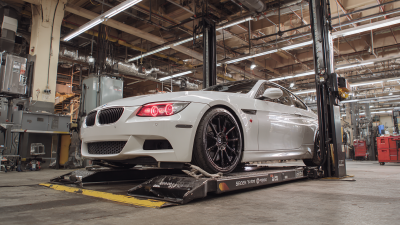
A single-post inground lift can provide practical tire support while keeping the underside of a vehicle accessible for routine service. Its 4-meter-long bridge-plate pallet is designed to accommodate vehicles with longer wheelbases, giving the tires a substantial support surface during lifting. Before raising a vehicle, position it carefully on the pallet and check that its weight is distributed as intended.
For vehicles with a shorter wheelbase, park in the middle of the pallet’s length to help prevent an uneven front-to-rear load. This simple placement step supports stable lifting and helps make tire and chassis work more manageable. The pallet’s integrated grille allows air and water to pass through, helping technicians clean the vehicle’s underside thoroughly while carrying out maintenance. With suitable positioning and attention to load balance, the lift can serve a range of vehicle lengths and support clear access for tire-related service.
Conclusion
Choosing a Portable Car Jack Lift starts with understanding the mechanism, working range, and rated capacity. Scissor jacks are compact for roadside use, trolley jacks offer convenient rolling access on suitable surfaces, and bottle jacks provide high lifting force in a small footprint. Compare each type within its intended load class, and remember that one U.S. ton-force is approximately 8.90 kN.
Do not select capacity from curb weight alone: consider the load on the axle or corner being lifted, and allow for an appropriate safety margin. Check that the jack’s minimum and maximum heights match the vehicle’s OEM jack-point specifications. Electric and air-hydraulic models also require a suitable power source and operating conditions. Follow applicable ASME PASE guidance, use the specified lifting points, and support the vehicle with properly rated jack stands before working beneath it.