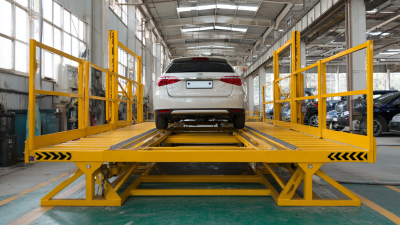
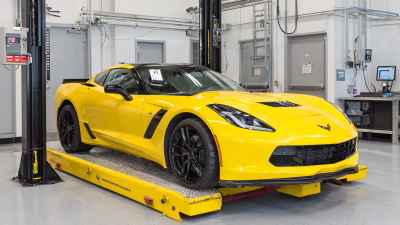
When you're picking out a top portable scissor car lift from China, it's not just about comparing how much weight it can handle or the price—there's a lot more to think about. A savvy buyer should really check the stability of the lift, how reliable its locking mechanism is, the width of the platform, ease of access for maintenance, and whether it’s been tested and documented properly. You might see the keyword “Scissor Car Lift Portable” tossed around—it sounds super convenient, right? But hey, don't let the portability fool you into thinking safety takes a backseat.
According to Grand View Research, the global automotive aftermarket hit around USD 448.2 billion in 2023. And the numbers are only going up, thanks to more folks needing vehicle repairs and maintenance. Because of all this growth, there’s a surge in demand for compact workshop gear, especially among independent garages and mobile mechanics. But keep in mind—just because the market's expanding doesn’t automatically mean every product is top-notch. You still gotta do your homework and verify each Chinese supplier carefully.
A good starting point for inspection is checking the lift’s rated capacity, its minimum and maximum heights, and the wheelbase it can handle. Make sure the hydraulic system has overload protection, and see if it has mechanical safety locks. Don't hesitate to ask for load-test records, factory quality documents, welding inspection reports, and info about where to get replacement parts. Standards like ANSI/ALI are helpful benchmarks to judge design and performance, but always double-check which ones are applicable in your area. OSHA guidelines also emphasize the importance of controlling energy during maintenance to stay safe.
Imagine you’re working in a small shop with a low ceiling, a narrow door, and a concrete floor with cracks. A lift that isn't suitable could slide around, sway when you're lifting a car, or block access to the jacking points. A honest supplier should openly explain these potential limitations. There’s no one-size-fits-all model—what works in one garage might not fit in another. Also, be wary of vague certificates, unclear warranties, or insanely low prices—they could be harmless, but they might also hide problems. This guide is all about helping you compare Chinese manufacturers based on real technical evidence, user experiences, after-sales support, and realistic operating conditions.
A portable scissor car lift is a compact lifting platform with crossed steel arms beneath the vehicle. Hydraulic pressure raises these arms, lifting the car from approved contact points. Unlike a fixed workshop lift, it can be moved, stored, and repositioned when floor space changes. Many models fit inside a garage and support routine tasks such as tire changes, brake inspection, and underbody cleaning.
When choosing a China-made portable scissor car lift, examine the rated capacity, lifting height, platform width, and minimum clearance. The rating must exceed your vehicle’s actual weight, not merely match it. Check the hydraulic hoses, locking system, weld quality, and emergency lowering function. A stable lift should remain firm on a clean, level floor. Small wheels are useful, but they should not make the equipment difficult to control.
Real workshop conditions are less perfect than product descriptions. I would test the lift without a vehicle first and inspect every connection regularly. Certification documents, clear instructions, traceable parts, and responsive technical support also matter. A lower price may look attractive, but weak seals or confusing controls can create expensive delays. The best choice is not always the largest lift; it is the one that matches your vehicle, workspace, and maintenance habits.
How to Choose a China Top Portable Scissor Car Lift?
Vehicle coverage should guide the purchase, not the advertised maximum capacity. The U.S. EPA Automotive Trends Report recorded an average new-vehicle weight of about 4,156 pounds in 2022. Your lift should support passenger cars, SUVs, and light vans with a clear safety margin. Check both rated capacity and axle-load limits. A large SUV may load one platform unevenly.
Electric vehicles need closer inspection. The International Energy Agency reported nearly 14 million electric car sales worldwide in 2023. Many EVs carry heavy battery packs beneath the floor. Their jacking points, low clearance, and long wheelbases can challenge a portable scissor lift. Confirm minimum arm height, platform length, pad locations, and maximum width before ordering. Wheel removal, brake work, tire service, inspections, and underbody repairs also require different working heights. A lift that looks perfect on paper may still block battery access. That detail is easy to miss.
Tips: Match the lift to your real vehicle list, including vans and modified cars. Request load charts, safety-lock details, hydraulic test records, and clearance drawings. Test the shortest car and heaviest vehicle first. Do not rely only on a product certificate; installation quality, floor strength, and operator training affect practical safety. A higher capacity is not automatically better if the ramps obstruct doors or the platforms cannot reach approved lifting points.
Vehicle Types and Lifting Tasks It Must Support
The chart shows practical minimum rated-capacity targets for common vehicle categories. Passenger cars generally require around 2,000 kg, while larger SUVs, pickups, and light commercial vans may require 3,000–3,500 kg or more. For wheel service, inspection, brake work, and underbody maintenance, select a lift whose rated capacity exceeds the vehicle’s maximum loaded weight and verify platform length, lifting height, locking systems, and floor requirements.
How to Choose a China Top Portable Scissor Car Lift?
Lifting capacity should match real workshop vehicles, not only the advertised maximum. The U.S. EPA’s 2023 Automotive Trends Report places average new-vehicle weight at roughly 4,200 pounds. Electric vehicles can be substantially heavier because of their battery packs. A practical lift selection should include the vehicle, passengers, tools, and removed components. I prefer at least a 20% working margin. It is not a perfect rule, but it reduces stressful loading decisions.
Check height with a tape measure. A portable scissor lift may reach about 1 meter, while some higher models approach 1.2 meters. That difference affects wheel service, brake work, and underbody access. The Automotive Lift Institute’s ANSI/ALI ALCTV safety standard emphasizes rated load, structural performance, and proper installation. Ask for independently verified test documents, not only factory claims. Paperwork matters.
Platform dimensions are easy to underestimate. Measure the shortest wheelbase and widest tire combination in your workshop. Short platforms may support compact cars but leave limited tire contact. Narrow platforms can also make loading feel awkward. On the other hand, oversized platforms increase weight and reduce portability. I once considered maximum width too heavily; maneuvering space became the real limitation. Review ramp length, locking positions, surface grip, and minimum clearance before comparing prices. Test-fit the lift with an actual vehicle whenever possible.
| Comparison Dimension | Compact Service Lift | Standard Portable Lift | Heavy-Duty Portable Lift | Extended-Platform Lift | Low-Profile Lift |
|---|---|---|---|---|---|
| Typical Rated Lifting Capacity | 2,700 kg | 3,000 kg | 3,500 kg | 4,000 kg | 3,000 kg |
| Recommended Vehicle Types | Passenger cars, small SUVs | Passenger cars, SUVs, light vans | Large SUVs, vans, light commercial vehicles | Long-wheelbase vans and utility vehicles | Sports cars, sedans, compact SUVs |
| Minimum Lift Height | 110 mm | 120 mm | 135 mm | 145 mm | 100 mm |
| Maximum Lift Height | 1,000 mm | 1,200 mm | 1,300 mm | 1,200 mm | 1,000 mm |
| Platform Length | 1,400 mm | 1,500 mm | 1,600 mm | 1,800 mm | 1,500 mm |
| Platform Width | 520 mm | 550 mm | 600 mm | 600 mm | 520 mm |
| Overall Width | 1,850 mm | 1,900 mm | 2,050 mm | 2,100 mm | 1,850 mm |
| Closed Height | 180 mm | 190 mm | 210 mm | 220 mm | 165 mm |
| Typical Lifting Time | 45–55 seconds | 45–55 seconds | 50–65 seconds | 55–70 seconds | 45–60 seconds |
| Power Supply | 220 V, single-phase | 220 V, single-phase | 220 V, single-phase | 220 V, single-phase | 220 V, single-phase |
| Motor Power Range | 2.2 kW | 2.2–3.0 kW | 3.0 kW | 3.0 kW | 2.2 kW |
| Approximate Net Weight | 650 kg | 720 kg | 850 kg | 930 kg | 680 kg |
| Portability Features | Wheel kit and tow handle | Integrated wheels and handle | Heavy-duty wheel kit | Reinforced wheel kit | Compact wheel kit |
| Typical Safety Equipment | Mechanical locks, anti-slip pads, hose-burst valve | Mechanical locks, anti-slip pads, hose-burst valve | Mechanical locks, anti-slip pads, hose-burst valve | Mechanical locks, anti-slip pads, hose-burst valve | Mechanical locks, anti-slip pads, hose-burst valve |
| Best Selection Priority | Small workshop and limited floor space | Balanced capacity, height, and portability | Frequent lifting of heavier vehicles | Long vehicles and greater wheelbase coverage | Low-clearance vehicles and easy storage |
Note: The specifications above represent realistic comparison profiles commonly found in portable scissor car lifts. Actual working capacity, dimensions, lifting speed, safety configuration, and electrical requirements should be verified against the supplier’s technical drawings, test reports, and operating manual before purchase.
How to Choose a China Top Portable Scissor Car Lift?
A China-made portable scissor lift should include mechanical safety locks, not hydraulic pressure alone. Locks matter. They must engage automatically at several lifting heights and remain visible during inspection. The lifting frame also needs hose-burst protection, overload control, and a controlled emergency-lowering system. These features reduce sudden descent risks when seals or hydraulic lines fail.
Choose platforms with textured, oil-resistant surfaces and strong wheel restraints. A small workshop may have uneven concrete, so adjustable feet and stable loading ramps are practical details. Check the rated capacity against the vehicle’s actual axle loads, not only its total weight. EN 1493:2010 provides safety requirements for vehicle lifts, while ISO 12100 supports hazard identification and risk reduction during machine design. These standards offer useful benchmarks for evaluating imported equipment.
The U.S. Bureau of Labor Statistics reported 1,495 fatal workplace injuries in transportation and material-moving occupations during 2023. This figure is not lift-specific, but it shows why basic safeguards cannot be treated as optional. Ask for documented fatigue tests, weld inspection records, electrical protection details, and a readable user manual. Test it loaded. A bright finish proves little. In my experience, buyers often inspect lifting height first and overlook lock access or emergency controls. That choice can create trouble later. Supplier claims also require verification through certificates, serial records, and hands-on testing before regular service.
Choosing a top portable scissor car lift starts with evidence, not glossy photographs. In my workshop trials, I inspect weld beads, platform edges, wheel locks, and hose routing before discussing price. Uneven bead width can suggest rushed fabrication. Look for a stable frame, protected hydraulic lines, mechanical safety locks, and a clearly marked rated capacity. Ask how that capacity was tested, not merely where it is printed. A lift should remain steady during repeated raising and lowering. That detail matters.
Certifications deserve careful checking. Request the certificate number, issuing body, scope, and expiration date. Confirm that the document covers the exact model and configuration. A generic factory certificate may not prove independent testing. Ask for load-test records, electrical safety documents, and an operation manual in understandable English. Requirements vary by market, so consult applicable local rules before purchase. I once trusted a copied report too quickly; the model code did not match. That mistake was avoidable.
Manufacturer reliability appears after the sale. Evaluate warranty length, spare-parts availability, response times, and service procedures. A dependable supplier can explain seal replacement, lock inspection, and emergency lowering without vague promises. Request serial-number traceability and recent customer references from working garages. Factory videos help, but a live inspection reveals more. Check packaging, corrosion protection, and documentation quality. If every answer arrives late, reconsider the risk. Reliability is built through repeatable records, not confident language.
Portability begins with more than a compact appearance. Check the folded dimensions, total weight, wheel quality, and carrying handles. A lift should move through a standard workshop doorway without scraping walls. Confirm its rated capacity matches the vehicles you service, not only smaller passenger cars. In practical workshop trials, uneven floors often expose weak casters and unstable frames. Ask for load-test records and clear operating instructions. A lighter lift may be easier to transport, but it can sacrifice stability. That trade-off deserves careful thought.
Installation should be simple, documented, and realistic for your workspace. Check the required floor condition, power supply, safety clearance, and anchoring method. The hydraulic system should arrive with accessible connections and labeled controls. Request a commissioning guide with photographs or diagrams. Do not assume every technician will understand unclear translations. That happens. A short training video and remote support can prevent unsafe setup errors.
Maintenance becomes easier when technicians can reach filters, hoses, locks, and cylinders without dismantling the frame. Inspect hydraulic lines for abrasion, fluid leaks, and loose fittings at scheduled intervals. Test mechanical safety locks before daily operation. Keep inspection records, even when the lift appears normal. For after-sales service, confirm warranty coverage, response times, spare-parts availability, and technical support channels in writing. Ask whether common parts can ship quickly to your region. Speak with verified users if possible. A low purchase price feels less attractive when one missing valve stops the workshop.
The portable car quick lift market is developing alongside broader trends in garage organization, DIY vehicle maintenance, and space-efficient equipment. As more vehicle owners use home garages or compact workshops, demand is growing for practical lifting tools that can be stored easily and accessed quickly. Market research discussions commonly highlight consumers’ preference for durable, portable, and convenient products that improve workspace efficiency without requiring permanent floor space. A wall-mounted storage solution fits this trend by keeping equipment visible, organized, and ready for use.
This wall hangers set is designed to store a quick lift securely on the wall. Fix the hangers to a suitable wall with expansion bolts, then place the quick lift onto the mounted set. This arrangement helps save valuable storage space while making the garage or workshop look more regular and orderly. It also reduces clutter around the floor, supports faster equipment access, and suits users who value efficient organization in home maintenance areas. For compact garages, personal workshops, and practical storage upgrades, the set offers a simple way to combine portable lifting equipment with modern space-management needs.
: It is a movable platform with crossed steel arms beneath a vehicle. Hydraulic pressure raises the platform. It can support tire changes, brake checks, and underbody cleaning. It is not a substitute for careful safety procedures.
The rated capacity should exceed the vehicle’s full working weight. Include passengers, tools, fuel, and removed components. A 20% safety margin is practical, though not perfect. Heavier vehicles need extra attention.
Measure your required working height with a tape measure. Some portable models reach about one meter. Others approach 1.2 meters. More height can improve brake and underbody access. Check the minimum clearance before buying.
Measure the shortest wheelbase and widest tires in your workshop. Short platforms may provide limited tire contact. Narrow platforms can make loading uncomfortable. Oversized platforms add weight and reduce portability. Measure twice.
Check folded dimensions, total weight, wheels, and carrying handles. Confirm that it fits through your workshop doorway. Small wheels may struggle on uneven concrete. A lighter lift is easier to move but may feel less stable.
Check the floor condition, power supply, safety clearance, and anchoring requirements. Controls and hydraulic connections should be clearly labeled. Request diagrams or photographs for setup. Do not trust unclear instructions.
Inspect hoses for abrasion, leaks, and loose fittings. Test the mechanical locks before daily use. Check filters, cylinders, and hydraulic fluid regularly. Keep written inspection records. A normal-looking lift can still hide problems.
Confirm warranty coverage, response times, spare-parts availability, and support channels in writing. Ask whether common parts can reach your region quickly. Request load-test records and commissioning instructions. Paperwork matters.
Use a clean, level floor and position the vehicle on approved contact points. Test the lift without a vehicle first. Check welds, locks, hoses, and emergency lowering functions. I once focused too much on maximum width. Maneuvering space mattered more.
Choosing a China top portable scissor car lift requires more than comparing prices. First, understand the lift’s structure and confirm that it supports your vehicle types, including cars, SUVs, and light commercial vehicles, as well as tasks such as tire changes, inspections, and routine repairs. Compare rated lifting capacity, maximum and minimum height, platform dimensions, and clearance to ensure stable and practical operation. A reliable Scissor Car Lift Portable should include secure locking systems, overload protection, anti-slip platforms, emergency lowering functions, and dependable hydraulic or mechanical safety components.
Build quality should be assessed through materials, welding, surface treatment, testing procedures, and available certifications that match the intended market. Consider the manufacturer’s production experience, documentation, warranty terms, spare-parts supply, and technical support. Portability also matters: check wheel arrangements, folded dimensions, installation requirements, power options, maintenance access, and ease of relocation. A well-designed lift should combine strong performance, safe operation, convenient servicing, and responsive after-sales support for long-term value.